

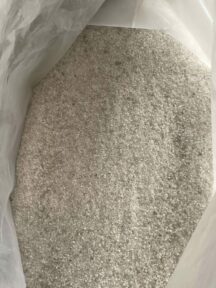
New Bunker Sand Blend
While bunkers seem like a hole in the ground with sand in them they are actually more complex than most golfers realize. I would like to go into some detail about what the process will be and what to expect from this project.
First, let’s talk about what exactly is the scope of the project. The overall footprint of the bunkers will remain the same. Only select bunkers will have some minor reshaping for playability and accessibility purposes. Once the existing sand is removed, drain lines will be installed. This will eliminate the issue of standing water in the bunkers after rain.
After the drains are installed, the entire bunker is lined with a product called Polylast. This is a rubber material that is porous enough to allow water to percolate through fast-reducing washouts on the faces of the bunkers. This material is also important as it stops contamination of the sand from rocks and soil below.
When the liner installation is complete, then the 1400-plus tons of custom mix sand can finally be installed. The sand that we chose is a blend that consists of three parts Augusta White and one part of a slightly larger aggregate. The reason we chose a blend is that pure Augusta White can easily be blown out of the bunkers during heavy winds. Augusta White is known for its beauty but it is also an amazing playing surface that reduces the classic fried egg lie. There is a sample of the sand in the Pro Shop for anybody who is interested in seeing it.
The renovated bunkers will not only be beautiful but will play the way that a bunker is intended to be played. After heavy rains, they will stay consistent and will not compact like they currently do. We are really excited to provide the membership with this amazing upgrade that will improve playability for years to come.

Photo of Course Superintendent, Stephen Garritson